Your client's Aadhaar is sitting in a shared folder. Anyone can see it.
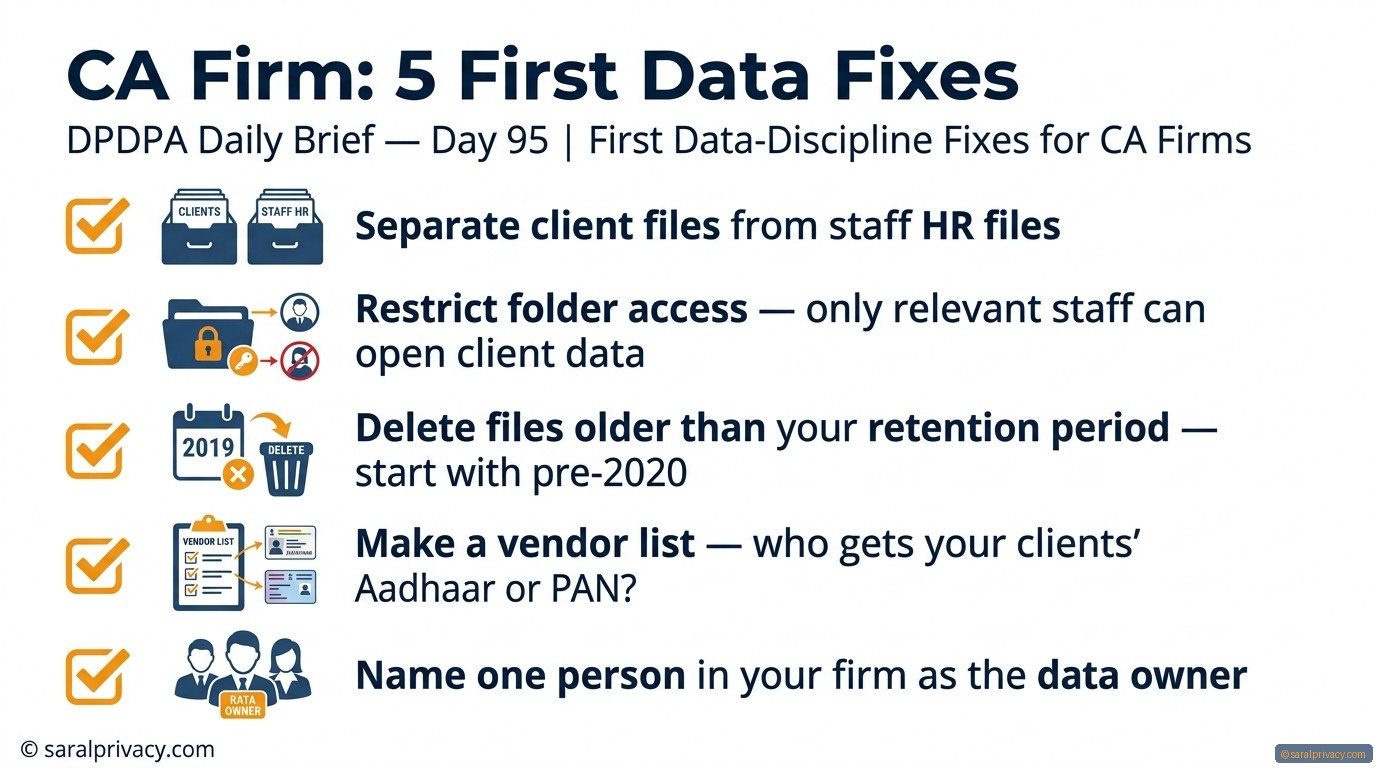
Your firm has hundreds of client files. PAN cards, Aadhaar copies, salary slips, bank statements. They are all mixed together in one shared folder. Any staff member can open any file. Some files are even shared on WhatsApp. You did not plan this. It just happened. But now the new data protection law says this is your problem to fix. The good news? You do not need to be perfect. You just need to start.
Think about your office right now. Is your Google Drive open to all staff? Can your junior accountant see a client's salary slip? Do you still have files from 2018 sitting in a folder? This is risky. The new law says you must control who sees what. You must also delete old files you no longer need. Start small. Fix your folder structure. Separate client files from staff resumes. Make a list of all vendors who get your clients' data. Pick one person to own this job.
Separate client folders from staff HR folders on your computer or Drive.
Make a list of vendors who receive your clients' Aadhaar or PAN data.
Check if your business is ready. Takes 3 minutes. Visit saralprivacy.com/assessment
“A better file structure is often the first compliance step.”
Free — takes 3 minutes
Answer a few simple questions. Get your free Readiness Score — sent to your email or WhatsApp.
Check My Readiness →Take our free 3–5 minute industry assessment to find out your compliance risk level.
Take Free Assessment →Free Download
The Complete DPDPA Compliance Guide
Plain English. Everything your business needs to understand the DPDP Rules 2025 — written for founders, not lawyers. Now in 7 Indian languages.
Download the Guide →5 Ready-to-Use Templates
Start complying — not just reading
Privacy Notice, Consent Language, Data Inventory, DSR SOP, Vendor Register. Delivered free to your email.
2-min reads, plain English, every morning. Free forever.
